New feature discovery & App engagement
New feature discovery & App engagement
Duration:
Duration:
3 months (2025 Q2)
3 months (2025 Q2)
Teams:
Teams:
CXD Noida, CX & CRI Bangalore
CXD Noida, CX & CRI Bangalore
Role:
Role:
Benchmarking, user flows, ui/ux, vibe coding, prototyping, testing
Benchmarking, user flows, ui/ux, vibe coding, prototyping, testing

What is it?
What is it?
Context
Context
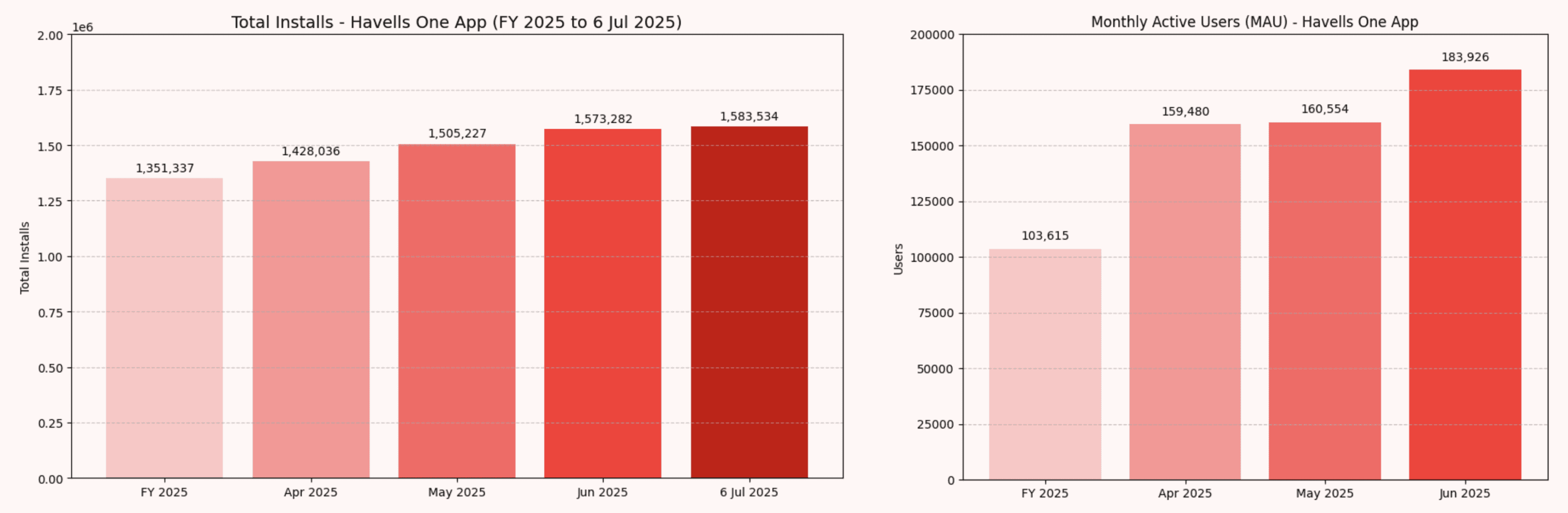
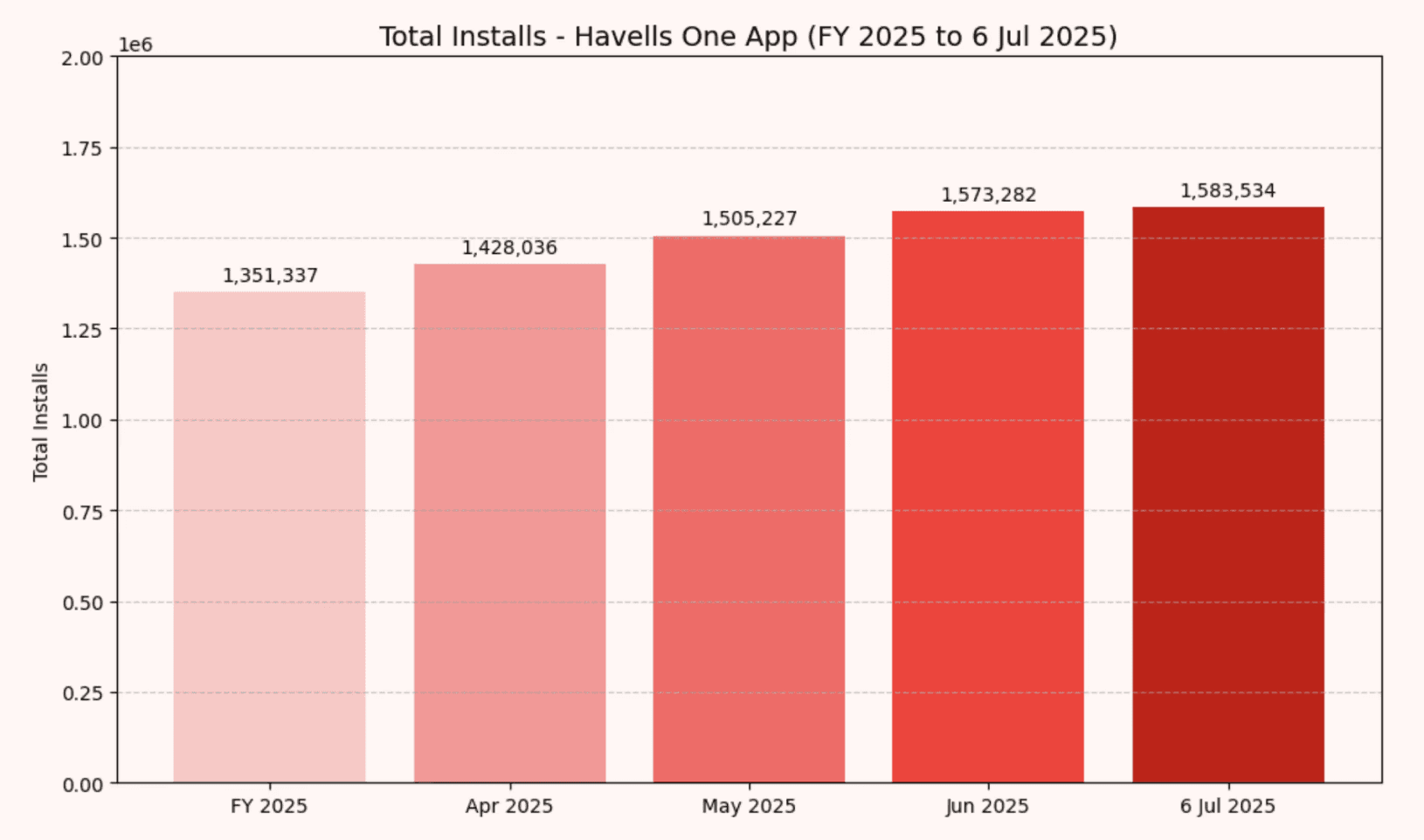
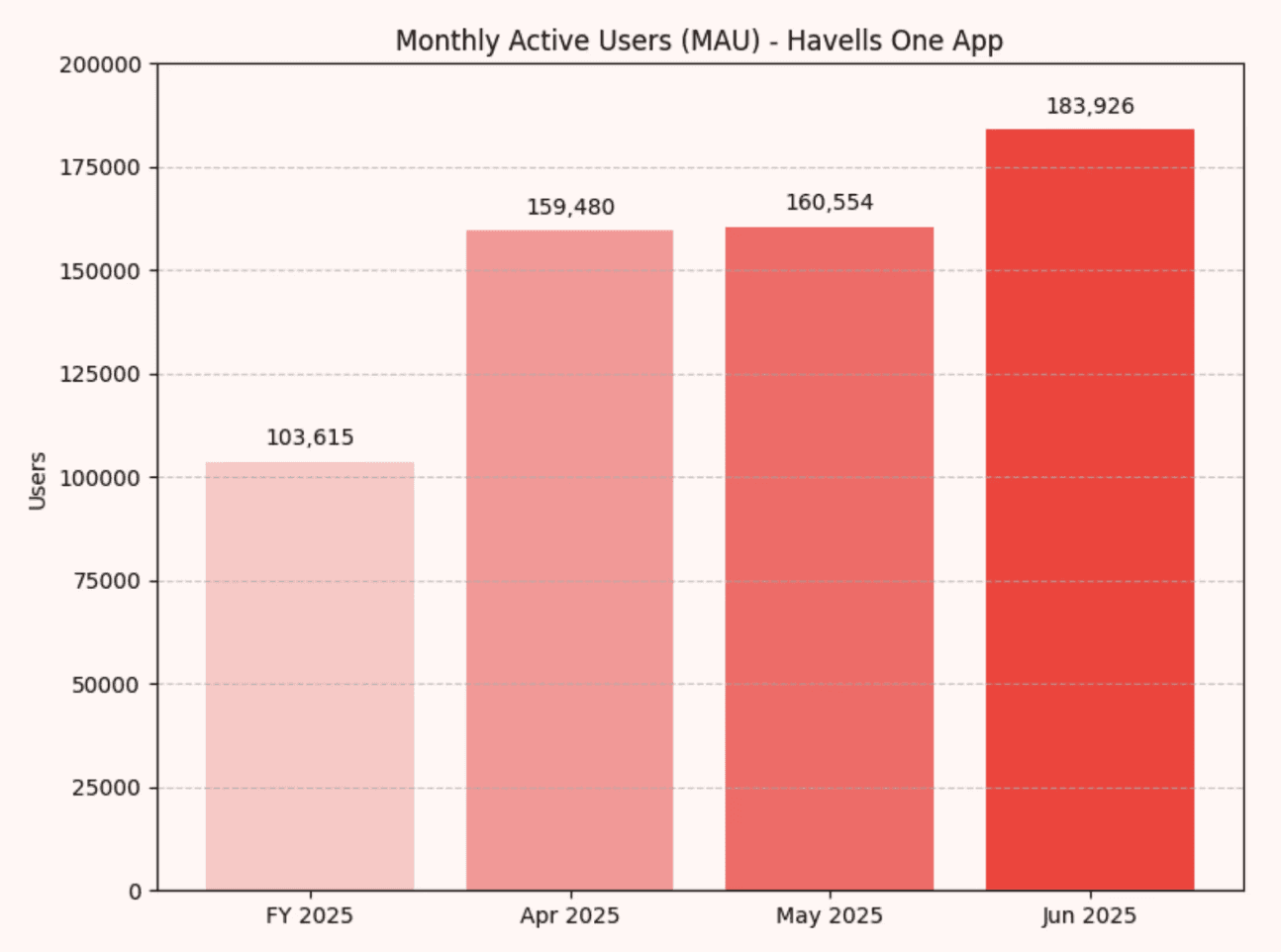
With over 1.5 million installs but only 183,000 MAUs by mid-2025, Havells One had an engagement gap — users completed their task and left, sometimes for weeks, while genuinely useful features sat undiscovered in the same app they already had installed.
With over 1.5 million installs but only 183,000 MAUs by mid-2025, Havells One had an engagement gap — users completed their task and left, sometimes for weeks, while genuinely useful features sat undiscovered in the same app they already had installed.
Why it exists?
Why it exists?
Problem Statement
Problem Statement
9 in 10 people who had the app installed weren't opening it in any given month. This isn't unusual for smart home apps. The core use cases - device control, warranty check, service request are low-frequency by nature. But the problem ran deeper than frequency. Even users who did open the app regularly were underusing it. New features sat largely undiscovered because users had locked into familiar navigation patterns and never deviated.
The brief split into two parallel problems: how do we get users to come back more often, and how do we get users who are already here to go further?
9 in 10 people who had the app installed weren't opening it in any given month. This isn't unusual for smart home apps. The core use cases - device control, warranty check, service request are low-frequency by nature. But the problem ran deeper than frequency. Even users who did open the app regularly were underusing it. New features sat largely undiscovered because users had locked into familiar navigation patterns and never deviated.
The brief split into two parallel problems: how do we get users to come back more often, and how do we get users who are already here to go further?
Who is it for?
Who is it for?
Competitor Study
Competitor Study
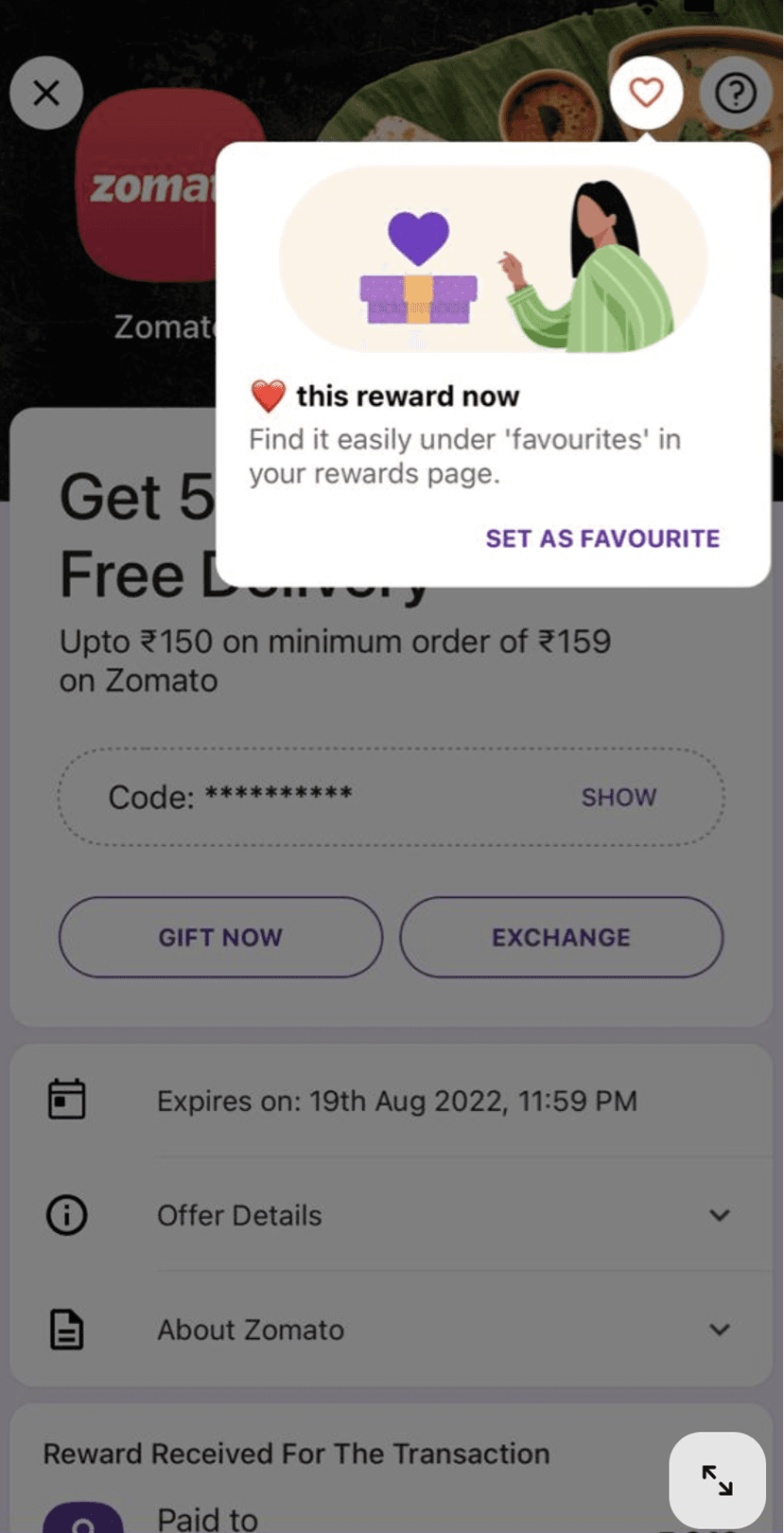
Before designing anything, we studied how other consumer apps with similar utility profiles - infrequent but necessary had successfully built engagement loops. The patterns that emerged pointed consistently toward three mechanisms: rewards, competition, and novelty.
Before designing anything, we studied how other consumer apps with similar utility profiles - infrequent but necessary had successfully built engagement loops. The patterns that emerged pointed consistently toward three mechanisms: rewards, competition, and novelty.
Contextual Nudges
When a user performs an action (e.g., turning on a light), show a subtle tip: "Did you know you can schedule this light to turn on at the sunset?"
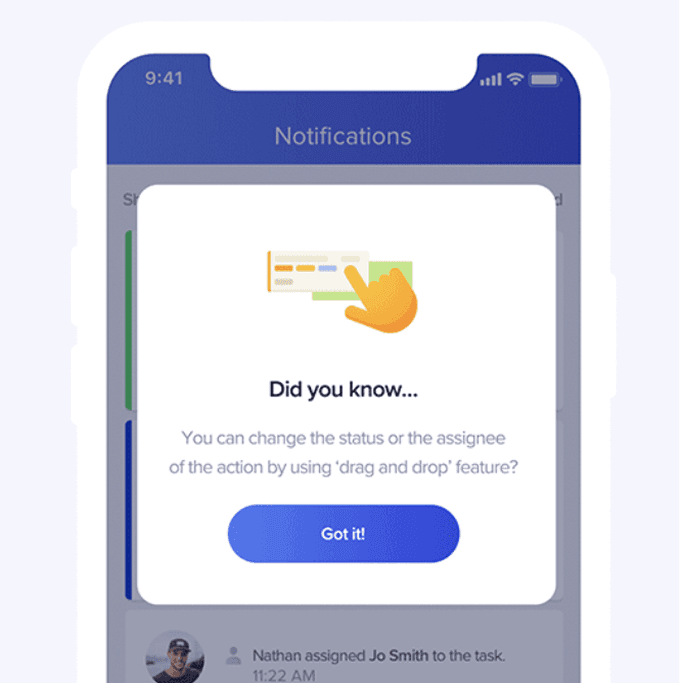
Feature Carousel
A rotating banner or pop-up in the dashboard that periodically introduces underused or new features with micro-tutorials or quick demos.
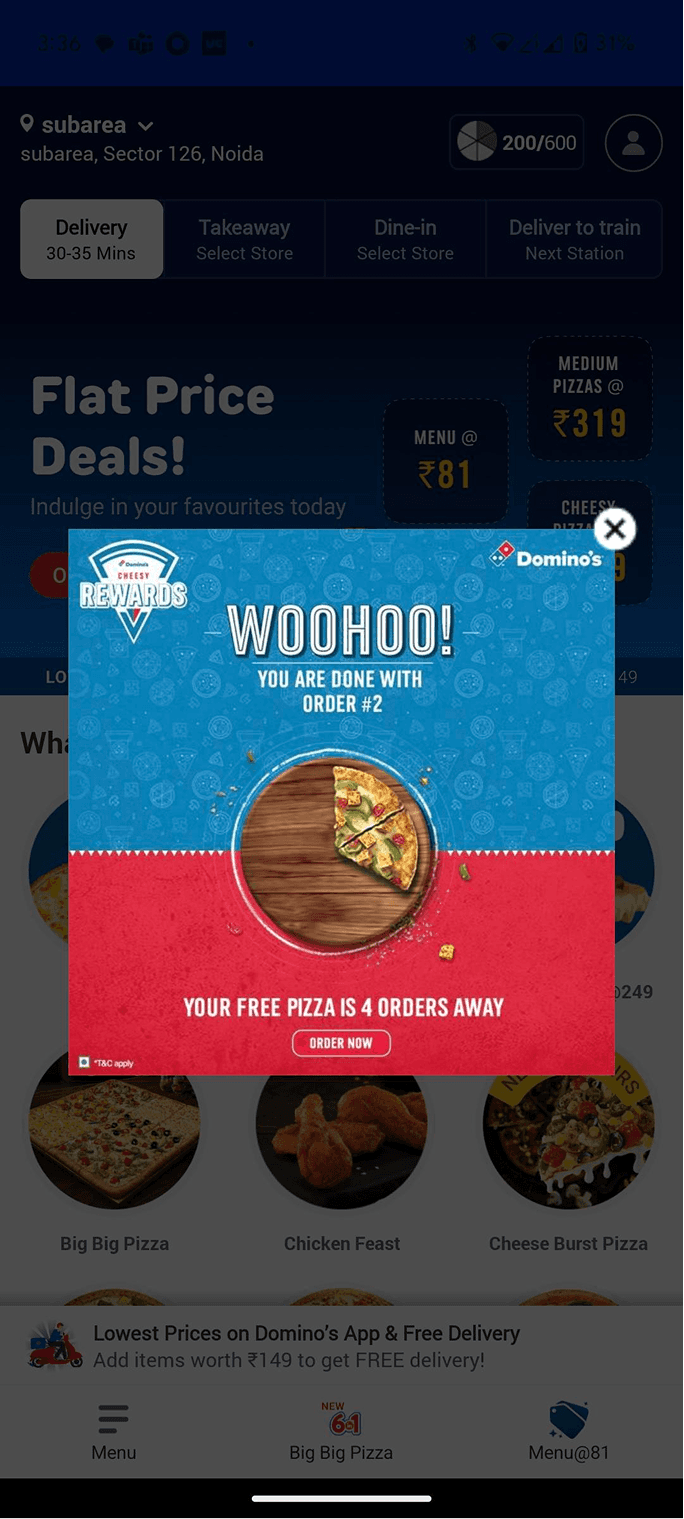
Gamified Challenges
“Try 3 automations this week and unlock a smart tip!” Encourages experimentation while subtly guiding users.
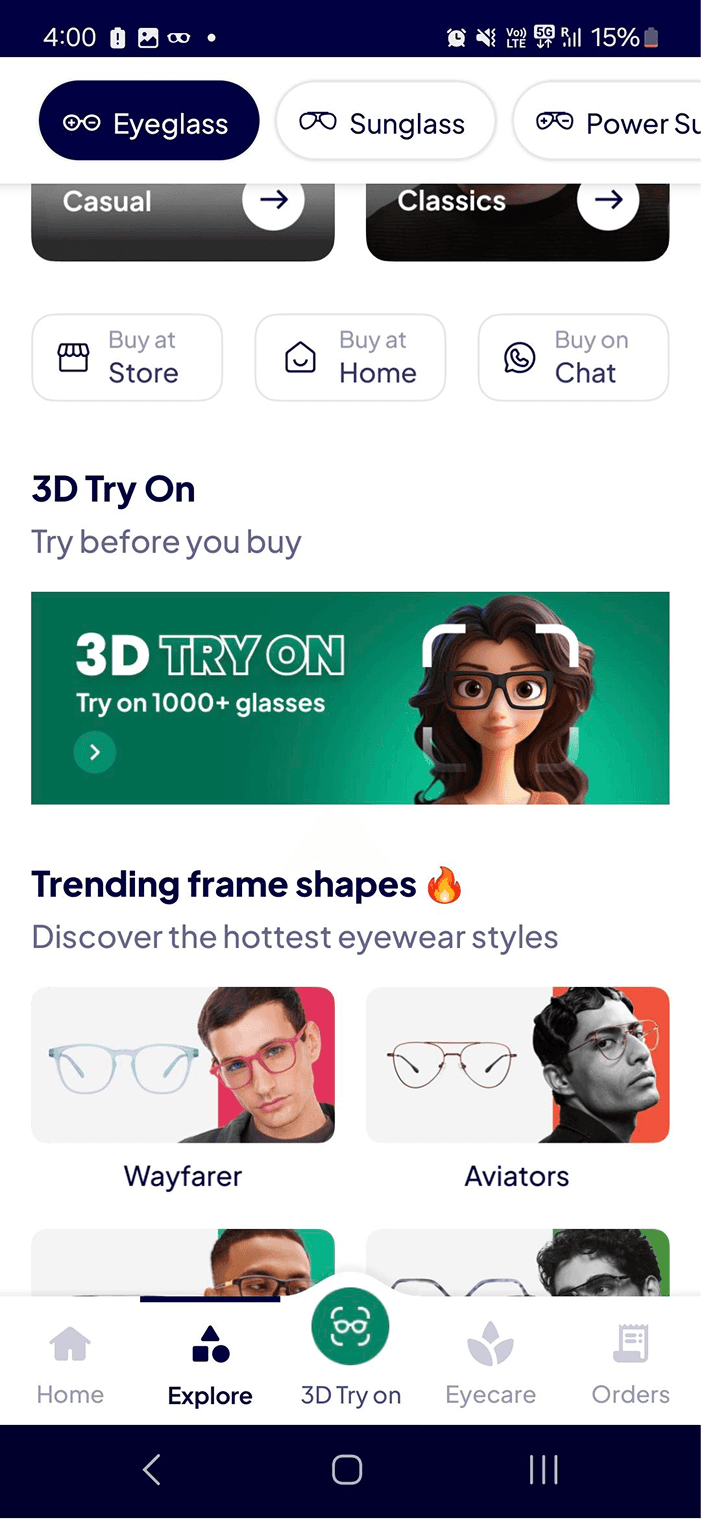
Interactive Widgets
A mini "Try This" widget on the home screen or device control panel showing live use-cases like:
“Create morning routine”
Contextual Nudges
When a user performs an action (e.g., turning on a light), show a subtle tip: "Did you know you can schedule this light to turn on at the sunset?"
Gamified Challenges
“Try 3 automations this week and unlock a smart tip!” Encourages experimentation while subtly guiding users.
Feature Carousel
A rotating banner or pop-up in the dashboard that periodically introduces underused or new features with micro-tutorials or quick demos.
Interactive Widgets
A mini "Try This" widget on the home screen or device control panel showing live use-cases like:
“Create morning routine”
What we built?
What we built?
Solution
Solution
New Feature Discovery
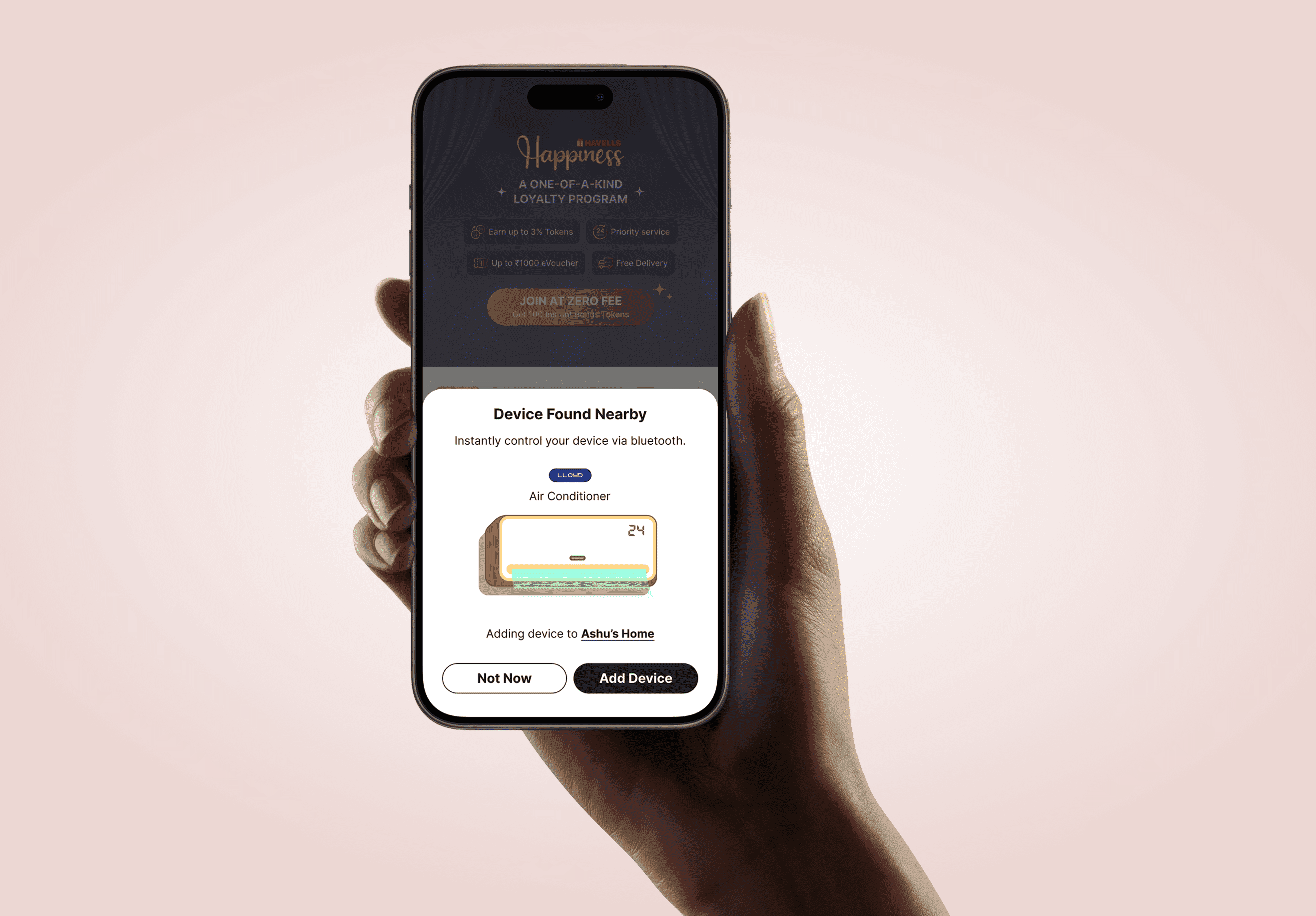
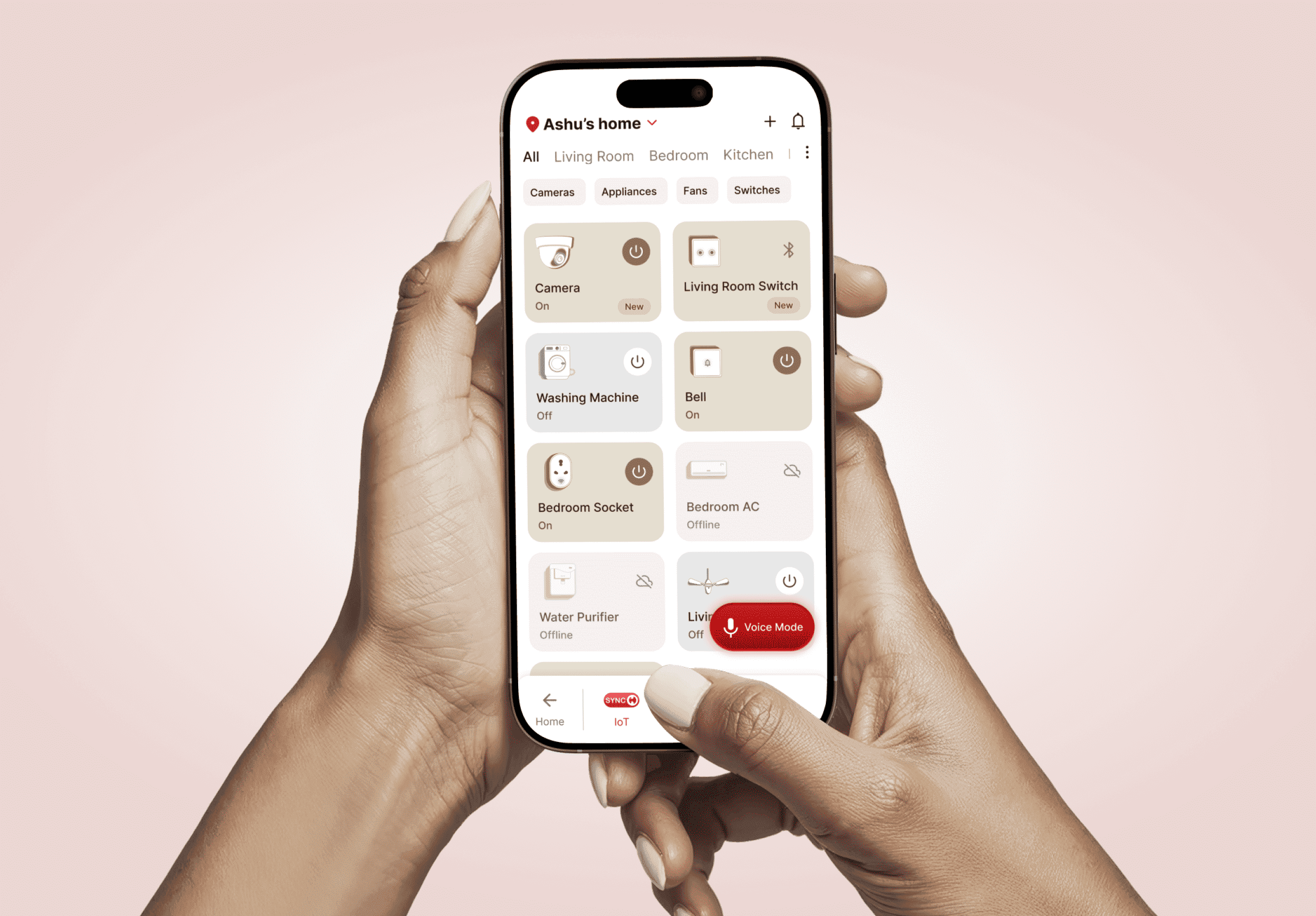
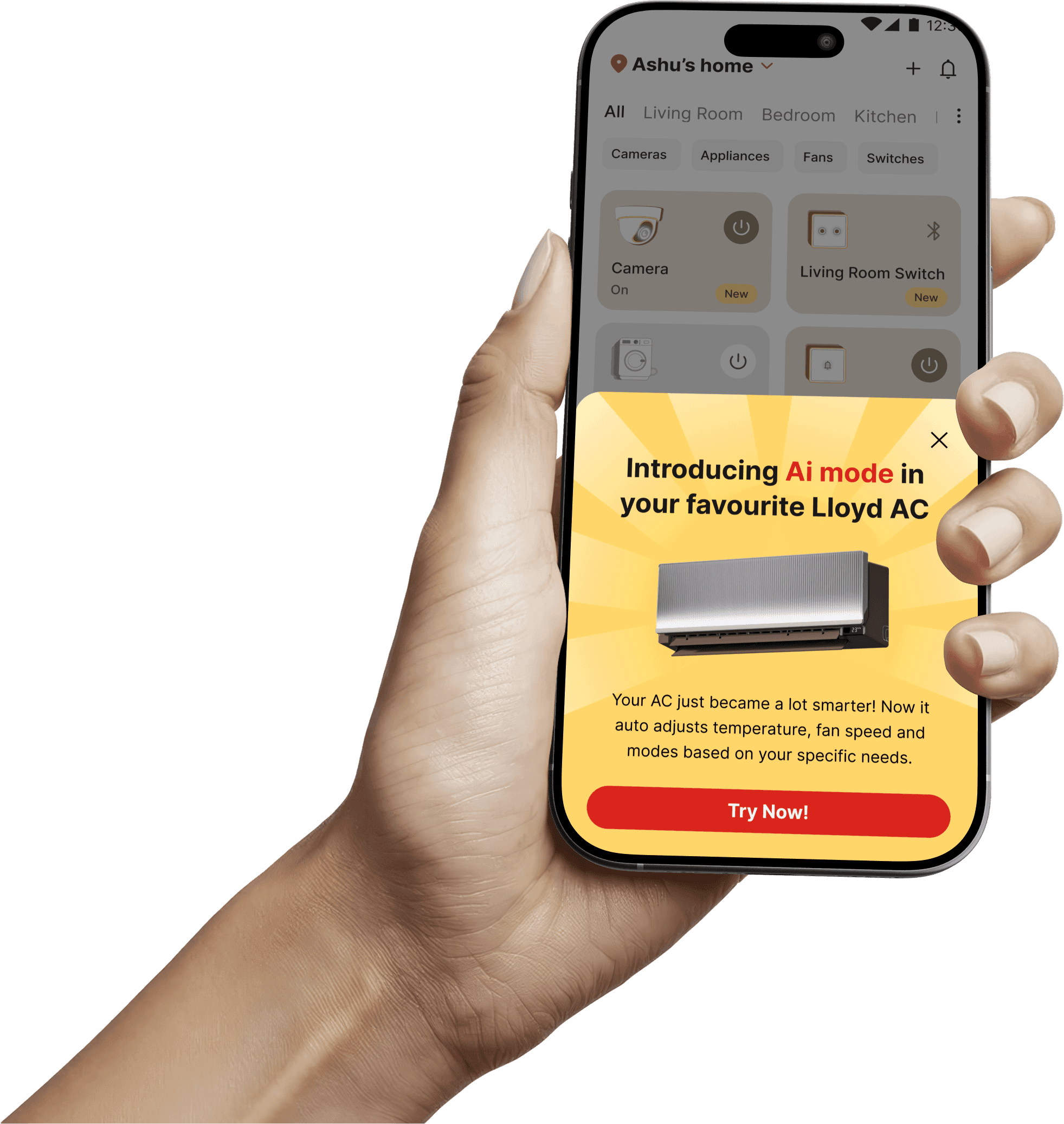
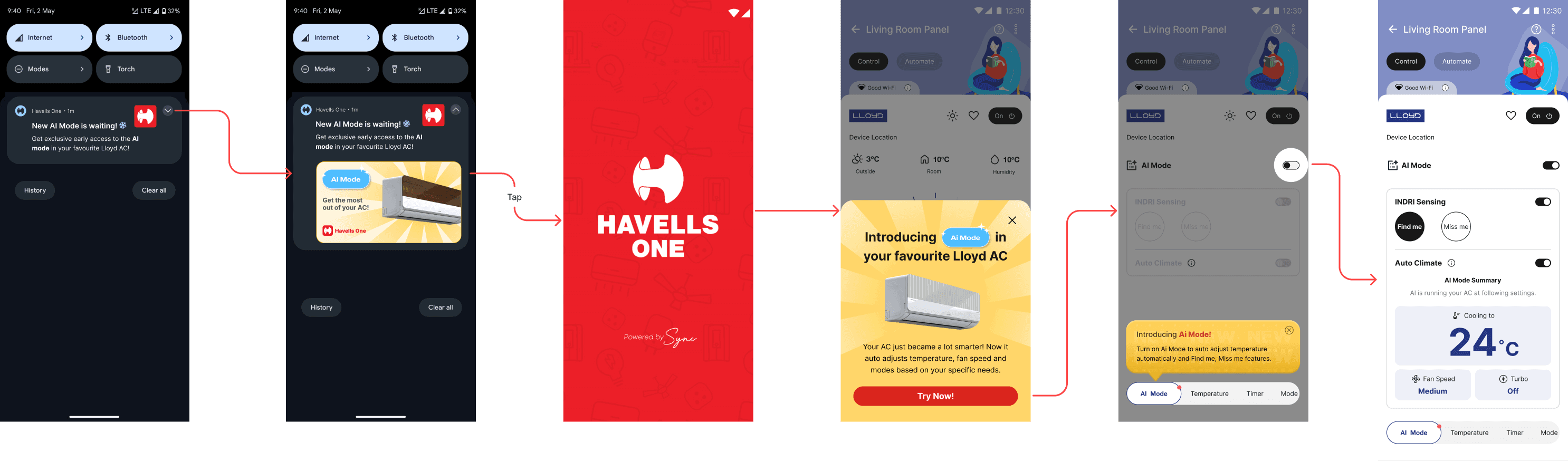
To improve awareness and adoption of new features, we introduced contextual nudges embedded within existing user flows. These nudges surface relevant features at the right moment, reducing the need for active exploration and aligning with user intent during routine tasks. This approach was applied to drive discovery of features like the ‘AI Mode’ in Lloyd ACs and the Buy AMC section, improving feature visibility while supporting business goals of increased adoption and utilization.
To improve awareness and adoption of new features, we introduced contextual nudges embedded within existing user flows. These nudges surface relevant features at the right moment, reducing the need for active exploration and aligning with user intent during routine tasks. This approach was applied to drive discovery of features like the ‘AI Mode’ in Lloyd ACs and the Buy AMC section, improving feature visibility while supporting business goals of increased adoption and utilization.
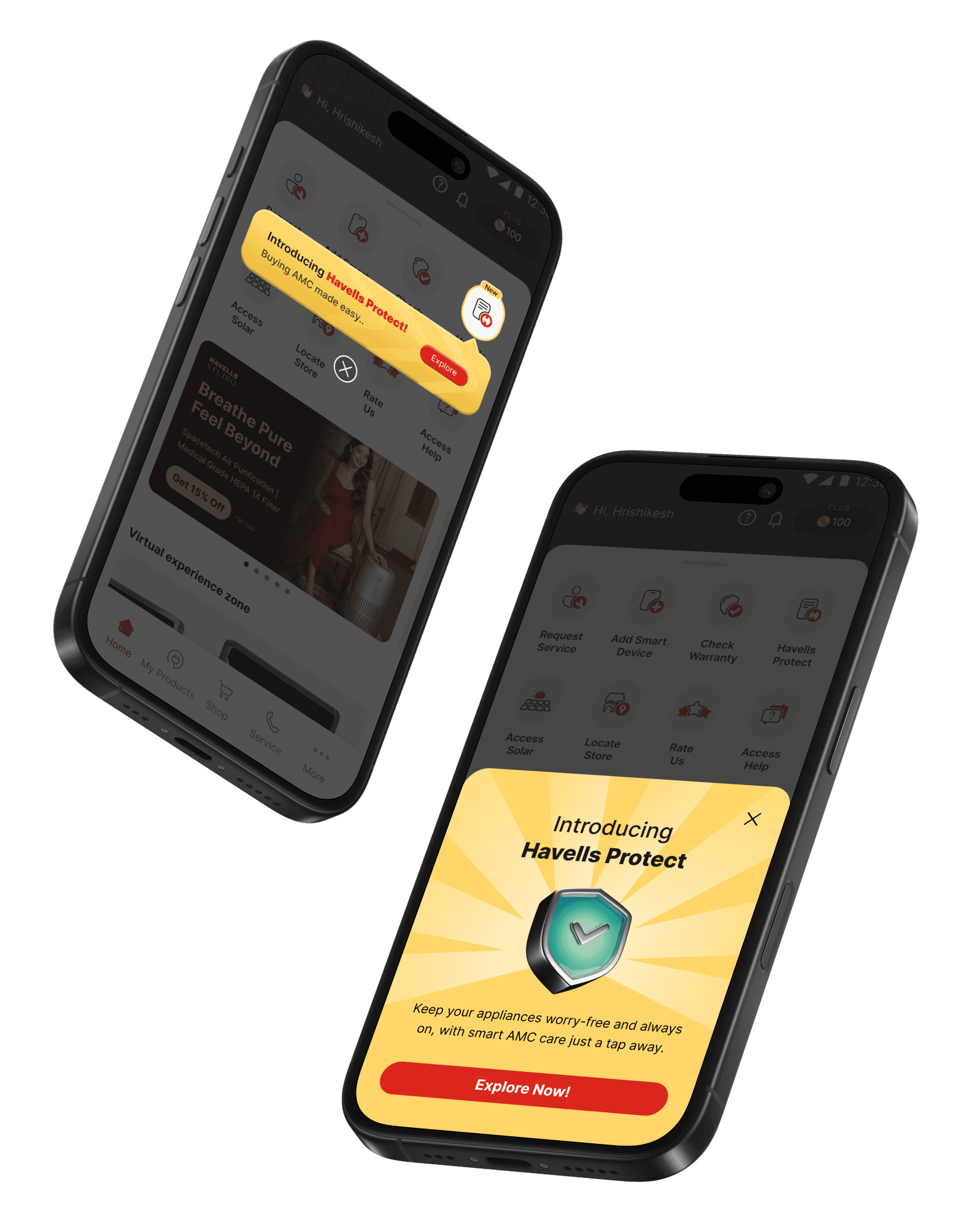
Ai mode feature discovery
Ai mode feature discovery
Scenario 1
Scenario 1
How would the user discovers New Ai mode from the IoT section?
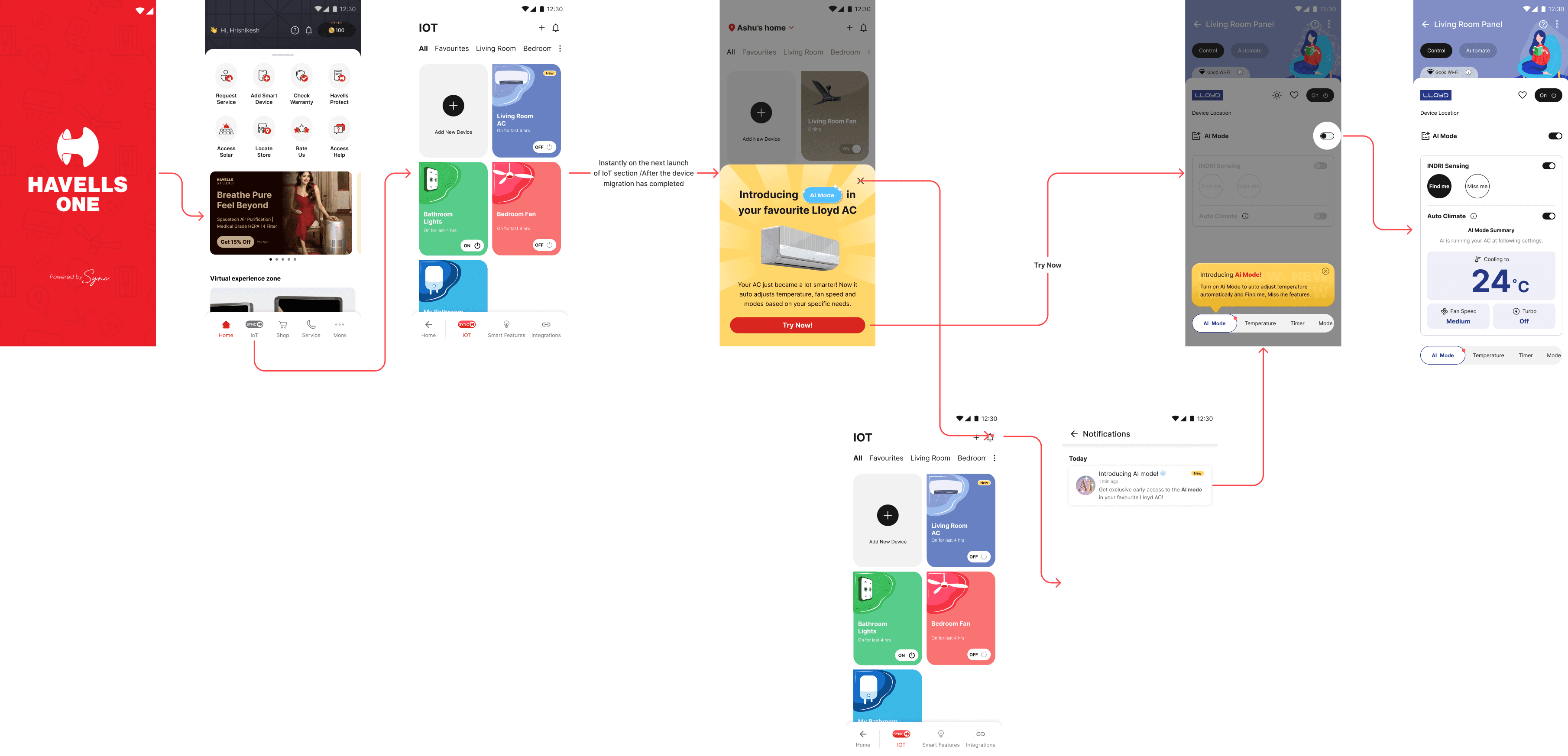
Scenario 2
Scenario 2
How would the user discovers New Ai mode from push notification?
App engagement mechanisms
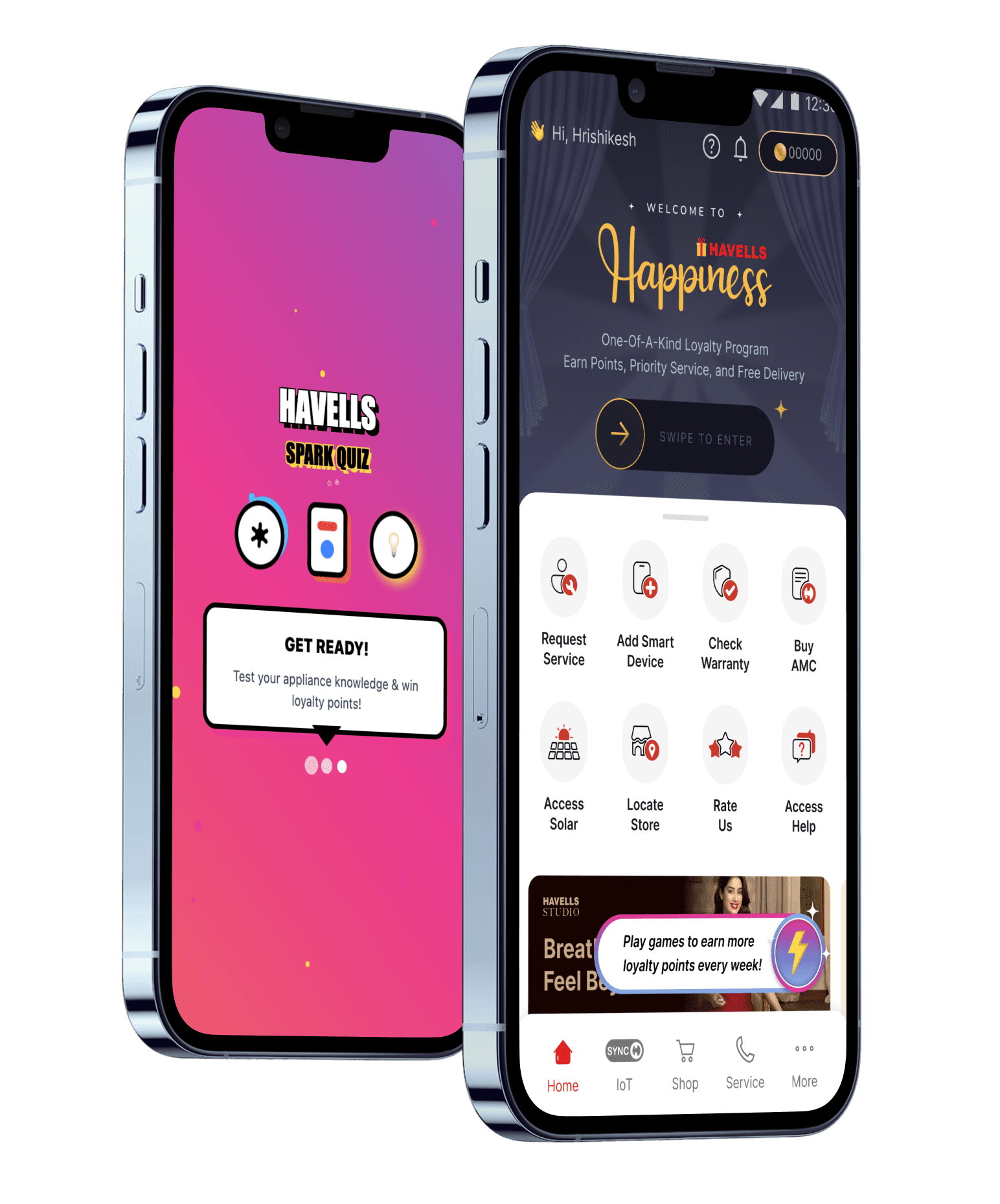
To increase repeat usage, I designed gamified engagement mechanisms that encourage users to return to the app through lightweight, rewarding interactions. Using vibe coding and Figma make Ai, I explored game-based concepts where users earn loyalty points on each visit - creating a clear incentive loop tied to real value through purchases on the Havells app and ecosystem. This approach balanced user motivation with business goals of improving retention, frequency, and long-term engagement.
To increase repeat usage, I designed gamified engagement mechanisms that encourage users to return to the app through lightweight, rewarding interactions. Using vibe coding and Figma make Ai, I explored game-based concepts where users earn loyalty points on each visit - creating a clear incentive loop tied to real value through purchases on the Havells app and ecosystem. This approach balanced user motivation with business goals of improving retention, frequency, and long-term engagement.
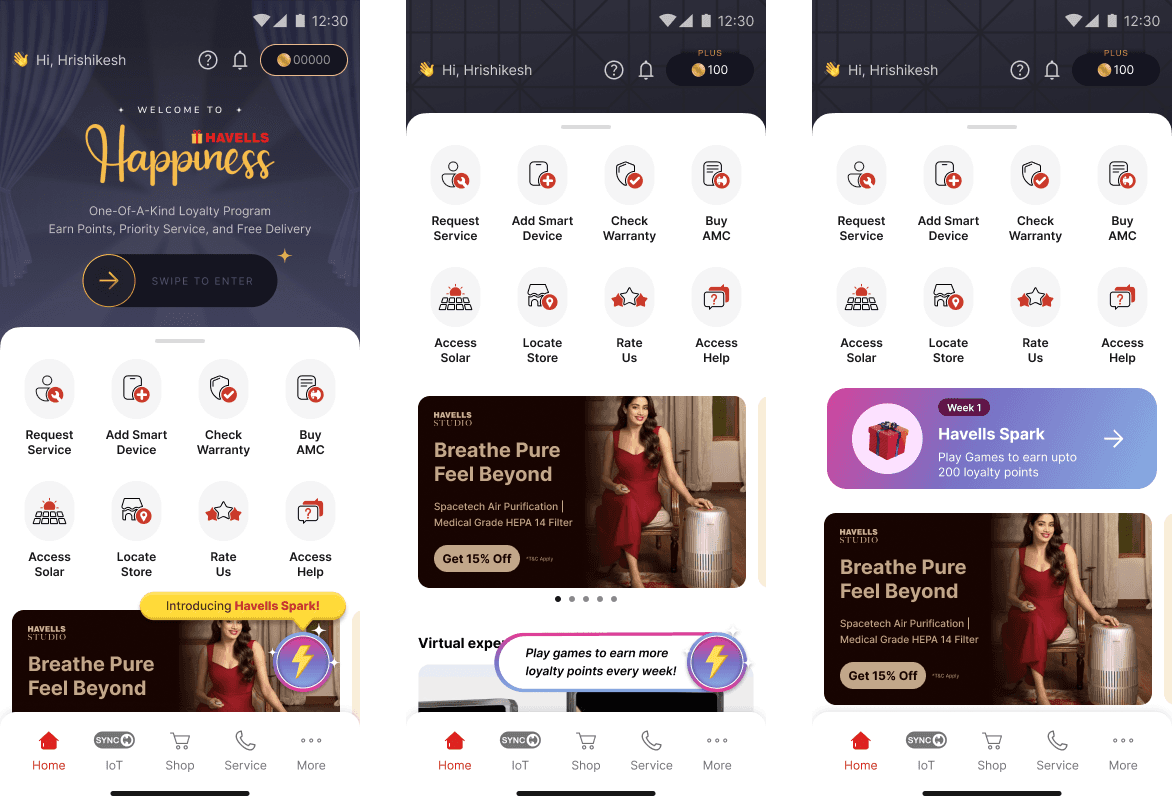
Discovery
Discovery
How would the user discovers weekly game?
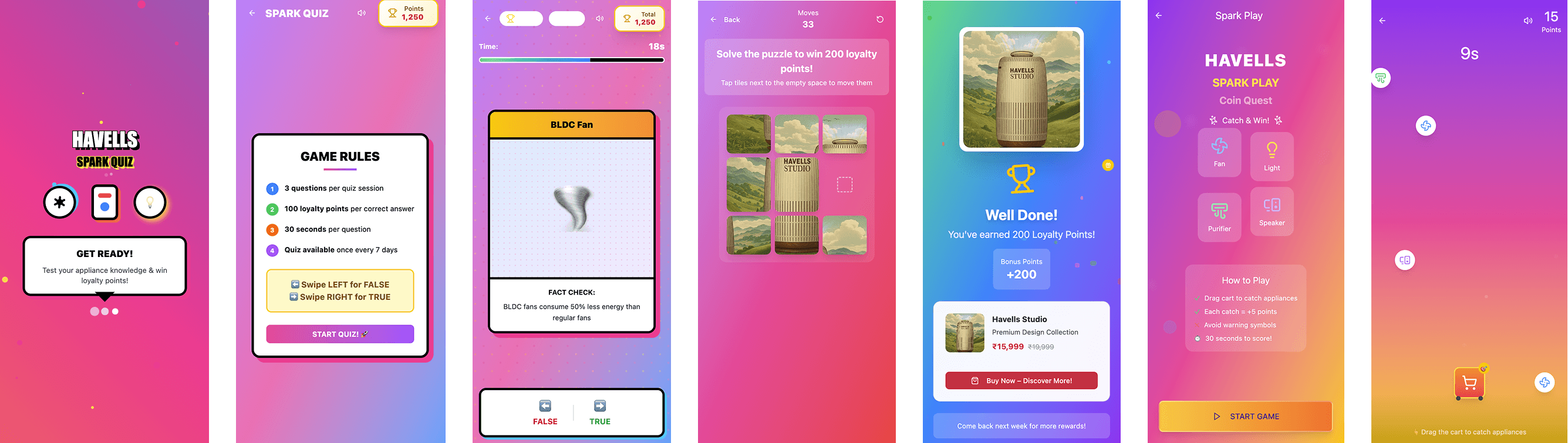
I made various game prototypes using Figma Make for the Havells context
What changed?
What changed?
Key metrics
Key metrics
Feature Discovery hit a 47% engagement rate against the 40% target benchmark, tracked via Adobe Analytics. The most significant signal came from the AI Mode feature adoption in Lloyd ACs - organic discovery via navigation sat at 12% before the Feature Discovery mechanism launched; after implementation it climbed to 61%, validating the prompt's timing and value framing.
Feature Discovery hit a 47% engagement rate against the 40% target benchmark, tracked via Adobe Analytics. The most significant signal came from the AI Mode feature adoption in Lloyd ACs - organic discovery via navigation sat at 12% before the Feature Discovery mechanism launched; after implementation it climbed to 61%, validating the prompt's timing and value framing.
More Case studies
More Case studies